The principle of Color Temperature - what is it?
Color temperature is a temperature measurement method, usually used in the fields of physics and astronomy. This concept is based on a fictitious black object that emits different colors of light when heated to different temperatures, and its objects appear in different colors. Just like when an iron block is heated, the iron block first turns red, then yellow, and finally white.
The color temperature calibrated by this method is exactly the opposite of what the general public thinks of "warm" and "cold". For example, people usually feel red. Orange and yellow are warmer, white and blue are colder, but in fact red has the lowest color temperature, and then gradually increases are orange, yellow, white, and blue, and blue is the highest color temperature.
Color Temperature range -- how does it change?
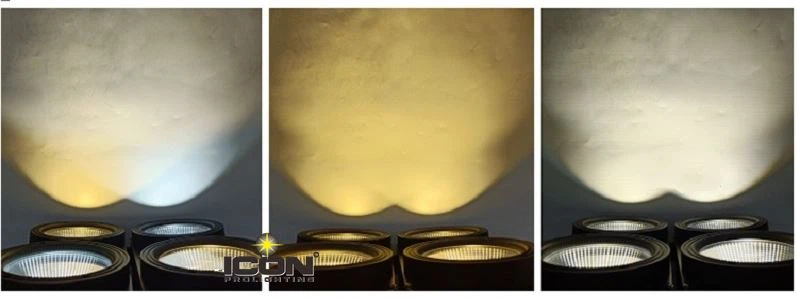
The color temperature of the light source is different, and the light color is also different.
When it is below 3000K, and the light color is reddish to give a warm feeling; there is a stable atmosphere and a warm feeling;
In the middle of 3000-6000K, and people have no particularly obvious visual psychological effects in this hue, and there is a refreshing feeling; therefore, it is called "neutral" color temperature;
And exceeds 6000K, and the light color is bluish, giving people a cool feeling.
Contrast of light color When using two light sources with large light color difference in the same space, the contrast will have a gradation effect. When the light color contrast is large, the brightness level can be obtained while the light color level is obtained.
If there are some knowledge of the stage light you want to know, you can leave us a message, and we will explain it to you in the next issue!